

Is a Bluetooth Backup Camera Worth It for Work Vehicles?
Backing up a work vehicle is one of the riskiest parts of the job. When you have limited rear visibility, constantly changing environments, or crowded job sites, even routine maneuvers become unpredictable.
For fleet operators or service teams, small reversing mistakes can quickly lead to equipment damage.
It can also disrupt daily operations and cause safety incidents. This is where a Bluetooth backup camera is designed to reduce those risks by giving a clear view behind the vehicle without a complicated installation.
Still, whether it's the right choice depends on how your vehicles are used day to day.
This guide helps you understand the practical differences so you can decide if the upgrade makes sense.
What is a Bluetooth Backup Camera for Commercial Use?
A Bluetooth backup camera is part of the broader wireless backup camera category. Instead of routing a video cable through the vehicle body, the camera sends footage wirelessly to a monitor mounted inside your cab.
When your vehicle shifts into reverse, the system activates automatically and displays a wide-angle rear view.
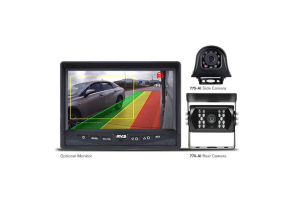
Many systems include distance grid lines that help you judge spacing, while infrared night vision improves visibility during low-light operations.
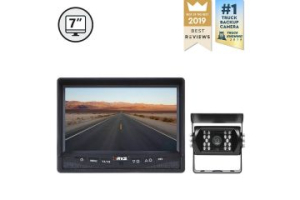
The setup includes :
the setup includes :
- A camera mounted on the rear of the vehicle or trailer
- A monitor installed on the dashboard or windshield
- Wireless transmission technology sends video from the camera to the screen
- A power source connected through reverse lights, a fused connection, or sometimes a solar-assisted battery
Must Read: 7 Installation Tips For Any Backup Camera System
Why Your Vehicle Operation Should Switch to Wireless Systems
Before moving towards wireless solutions, consider reflecting on practical needs rather than trends.
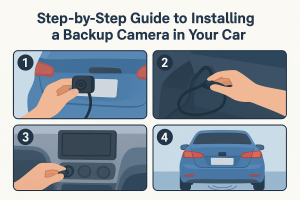
1. Faster Installation with Less Downtime
Wireless systems often install within 30 -60 minutes, allowing your vehicles to return to service quickly, especially for fleets. It reduces installation time, which translates directly into lower labor costs.
2. Flexibility Across Multiple Vehicles
This is especially useful for large operations where trailers change frequently, and wiring becomes restrictive.
3. Improving Reversing Safety
Backing incidents are a common cause of fleet damage. Additional rear visibility helps in detecting obstacles earlier and maneuvering more confidently.
4. Long-Term Operational Benefits
It also improves awareness, which helps in minor collisions, reduces repair interruptions, lowers downtime, and ensures a smooth workflow.
5. Built to Meet Demanding EnvironmentsCommercial camera systems are designed for tough conditions. Many models include waterproof ratings such as IP68 or IP69K, vibration resistance, night visibility, and multi-camera support.
Read More: What Fleets Need to Know About ADAS and FMCSA’s 2025 Safety Standards"
Difference Between Bluetooth Backup Camera and Wired Systems
Both wireless and wired systems improve visibility, but they solve slightly different problems. The choice often comes down to how permanent the setup needs to be.
| Feature | Bluetooth Backup Camera | Wired Camera System |
|---|---|---|
| Installation | Usually quick and straightforward | Requires routing cables through the vehicle |
| Vehicle Modifications | Minimal changes to the vehicle body | More involved installation |
| Flexibility | Easier for vehicles that swap trailers | Best for fixed installations |
| Signal Reliability | Generally stable but may depend on the environment | Extremely consistent signal |
| Best Use Cases | Vans, pickups, service fleets | Long-term heavy-duty vehicles |
Read More: 5 Reasons Why Vehicle Camera Systems Aren't Meeting Expectations
What Are the Limitations of the Bluetooth Backup System?
Wireless camera systems work well in many situations, but they do have some limitations.
- Video Delay: Most modern digital systems keep the delay very small, and drivers rarely notice it while reversing at low speeds.
- Signal Range: Typical systems cover about 50 to 100 feet. This works well for most trucks, vans, and moderate trailer setups, though longer trailers may require extended-range models.
- Signal Interference: Areas with heavy machinery or dense radio activity can sometimes cause interference. High-quality systems use frequency-hopping technology to maintain a stable connection.
- Power Management: Wireless cameras still need power. Some systems use solar-assisted batteries, while others connect to vehicle wiring for consistent operation.
Should You Consider a Bluetooth Backup Camera?
Is a Bluetooth Backup Camera Right for Your Vehicle?
Not every vehicle setup requires the same solution. It is a good fit if:
- Your cargo vans have blocked rear visibility
- Delivery and service fleets
- Vehicles frequently swap trailers
- Operational needs quick safety upgrades
But it might be less suitable for:
- Extremely long, heavy-duty vehicles, which work better with permanent wiring
- Environments that have extreme signal interference
- Operations needing continuous monitoring while you drive
Tips to Choose The Right Setup for Your Fleet
When evaluating options, focus on daily usability instead of comparing specifications.
Look for:
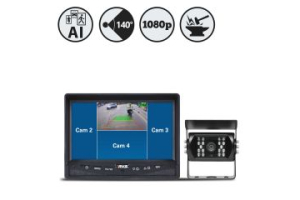
- Image clarity of at least 1080p HD resolution with a 120°–180° viewing angle to capture objects and areas clearly.
- Choose a monitor usability that performs well in commercial settings. Look for sunlight-readable displays, simple controls, and quick switching between camera views.
- Look for features such as IP68/IP69K waterproof ratings, wide operating temperature ranges, and shock-resistant construction.
- Multiple vehicle operation requires fast pairing and expandable camera configurations.
- Also, make sure to test the equipment under working conditions, both day and night, for the most reliable evaluation.
- Check your mount the camera higher for a better viewing field. Also, connect power through reverse lights or a fused source.
Conclusion
A Bluetooth backup camera delivers meaningful value for many work vehicles and helps in improving real visibility while also avoiding complex installation.
When flexibility, faster deployment, and safer reversing matter most, wireless systems provide a practical upgrade.
Choose the system that reduces daily friction for drivers rather than the one with the longest feature list.
Rear View Safety develops camera systems designed especially for the commercial environment, helping you to improve visibility without adding operational complexity.
Explore Backup Camera Solutions Designed for Real Work Vehicles.
FAQs
Are Bluetooth backup cameras reliable for work vans?
Modern Bluetooth backup camera reliable for vans, trucks, and trailers when designed for commercial use.
How far can a Bluetooth backup camera transmit video?
Most commercial-grade systems transmit between 50 and 100+ feet, which is sufficient for many trailer setups, delivery trucks, and cargo vans.
What is the difference between a Bluetooth backup camera and a wireless backup camera?
A Bluetooth backup camera is a type of wireless backup camera that transmits video without running cables, focusing on hassle-free installation and flexible vehicle compatibility.