

360 Car Camera vs Rear Parking Camera
Rear cameras are now standard on most vehicles, helping improve visibility and prevent back-up collisions. However, these cameras do not cover the sides and front of a vehicle, where many low-speed incidents occur. Data from the National Highway Traffic Safety Administration shows that back-up accidents lead to an average of 263 fatalities and more than 10,000 injuries each year in the U.S., mostly in parking lots, loading zones, and other non-traffic areas.
For commercial vehicles such as vans, trucks, and fleet cars operating in congested environments or during long shifts, this limited visibility increases the risk of preventable collisions.
360° car camera systems help reduce these risks by providing complete surround visibility and removing blind spots around the vehicle. This helps drivers detect nearby vehicles, pedestrians, and obstacles during maneuvering, reducing collision risk and helping reduce repair costs, claims, and downtime.
In this article, we compare 360° car camera systems vs traditional rear cameras, exploring the differences and features and how these systems help improve visibility and safety during low-speed maneuvering.
360° Car Camera Systems vs Rear Cameras
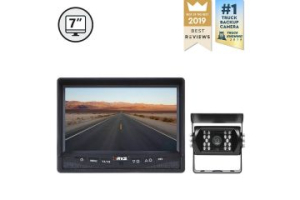
Rear cameras are a basic safety feature in vehicles that help drivers see directly behind the vehicle when reversing. With a camera mounted at the rear of the vehicle that transmits a video feed to an in-cab monitor, drivers can see rear obstacles more easily. But rear-only visibility does not eliminate blind spots, which can increase the risk of collisions when parking or reversing.
360° car camera systems are advanced visibility systems that give drivers a complete real-time view around the vehicle, eliminating blind spots and making low-speed maneuvers safer and more controlled.
Here’s how 360° car camera systems help businesses improve vehicle visibility and maneuvering safety:
Complete Surround Visibility
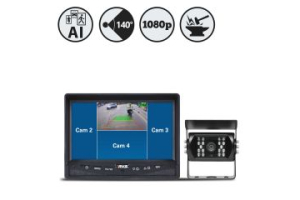
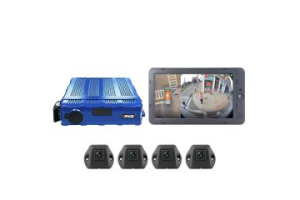
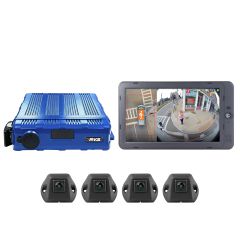
These camera systems typically feature four wide-angle cameras stitched into a single top-down image, allowing drivers to see pedestrians, parked vehicles, curbs, and small obstacles that mirrors may not catch, especially when backing up or turning in narrow areas. This helps reduce back-up incidents, low-speed collisions, and close-range contact in parking lots, retail centers, and delivery zones.
Rear View Safety’s 360° Bird Eye View Camera System switching between views, helping drivers navigate tight spaces, reduce collisions, and avoid costly damage.
Large fleets can add proximity sensors to help detect hazards at close range in tight loading points or congested routes. With clear HD displays, customizable overlays, and automatic switching to rear or side views when reversing or signaling, drivers get a complete view of the vehicle’s perimeter as soon as they start moving, reducing preventable collisions and enhancing driver safety.
Incident Review
The 360° car camera systems record synchronized HD footage from multiple camera views, giving fleets visual records that help review incidents, coach drivers, and reduce liability. Bird’s-eye view cameras can help reduce crashes with obstacles by up to 28 percent, helping fleets lower repair, downtime, and liability costs. Basic rear parking cameras or dash cam footage do not provide the same level of visibility around the vehicle.
Rear View Safety’s RVS-02-360 InView Around Vehicle Monitoring System records surround-view footage onto multiple SD cards with up to 1TB total storage, allowing fleets to keep video from several camera views when incidents happen.
Improve Safety and Reduce Risk with 360° Car Cameras
360° car camera systems are an essential safety upgrade for commercial vehicles. Complete surround visibility helps reduce collision risk when backing up or parking, while audio-visual alerts improve driver awareness, especially on larger vehicles. AI obstacle detection and recording features in bird eye view cameras help protect businesses from liability claims and provide video evidence for incident review and driver coaching. These benefits go beyond what standard rear parking cameras can provide.
Frequently Asked Questions
What is the difference between a bird’s-eye view camera and blind-spot radar systems?
Bird’s-eye view camera systems show a stitched top-down image around the vehicle during maneuvering. Radar blind-spot systems detect moving vehicles in adjacent lanes at higher speeds. Many fleets use both together because they address different visibility risks.
Can 360° camera systems integrate with proximity sensors or other safety equipment already installed?
Yes. InView 360° systems support integration with 6- or 12-sensor proximity alert systems that provide audible and visual warnings when vehicles approach nearby obstacles in tight operating environments.
How long does installation usually take for a 360° bird’s-eye view system?
Installation time depends on vehicle type, but auto-calibration features available on Rear View Safety’s 360° car camera systems reduce installation and setup time significantly compared with older surround-view systems that required manual calibration.
Can 360° camera systems be installed on vehicles already in service?
Yes. Surround-view systems are designed for retrofit installations and can be added to existing fleet vehicles without replacing factory rear cameras.
Can one 360° car camera system work across different vehicle types in the same fleet?
Yes. Systems like Rear View Safety’s InView 360° Bird Eye View Cameras are designed for mixed fleets and can be installed on sedans, vans, pickups, and larger service vehicles. Camera placement and overlays can be adjusted to match different vehicle sizes and body types.
Need help choosing the right camera system for your fleet? Use our ROI calculator to estimate how much you can save or visit the support page for quick answers. If you’d prefer to speak with someone, feel free to contact us directly.